While international attention heavily focuses on the acute shortages of food and water in the Gaza Strip, a silent and severe health crisis is unfolding within overcrowded displacement camps and shelters: the comprehensive collapse of public and personal hygiene infrastructure. The concentration of hundreds of thousands of displaced individuals in shelters lacking basic sewage systems, combined with a severe shortage of water, has created a fertile breeding ground for viruses and bacteria. This crisis is severely compounded by the total disappearance of essential cleaning supplies from local markets, and the exorbitant, record-high prices of the few items that enter via external shipments, making the simple purchase of a bar of soap a financial impossibility for exhausted families.
In response to this complex humanitarian and health situation, and to protect children and women from the rapid spread of contagious skin conditions, Ejabh Organization launched its specialized relief campaign to implement a critical hygiene kits distribution in Gaza. The project aims to provide fundamental preventative tools and secure essential personal hygiene supplies for displaced families.
1. Dimensions of the Health Crisis: Camp Environments and Skin Diseases
Living for consecutive weeks and months in environments entirely devoid of clean, usable water infrastructure has turned maintaining personal hygiene into a grueling daily struggle for residents. According to field assessments conducted by our teams, the severe lack of personal cleaning supplies has led to a widespread and rising incidence of painful, contagious skin conditions—such as scabies, severe bacterial infections, and ulcerative rashes. These conditions primarily affect young children due to their weaker immune systems and close interactions within crowded camp environments.
Consequently, Ejabh’s intervention was systematically designed to redirect humanitarian efforts toward preventative health support. Personal hygiene kits and cleaning supplies are no longer a complementary aid or a luxury; they have transformed into an emergency medical necessity that directly prevents the spread of infection, ultimately relieving the heavy pressure on overstretched field clinics and medical points.
2. Technical Logistics: What Did Ejabh Pack Inside Each Hygiene Kit?
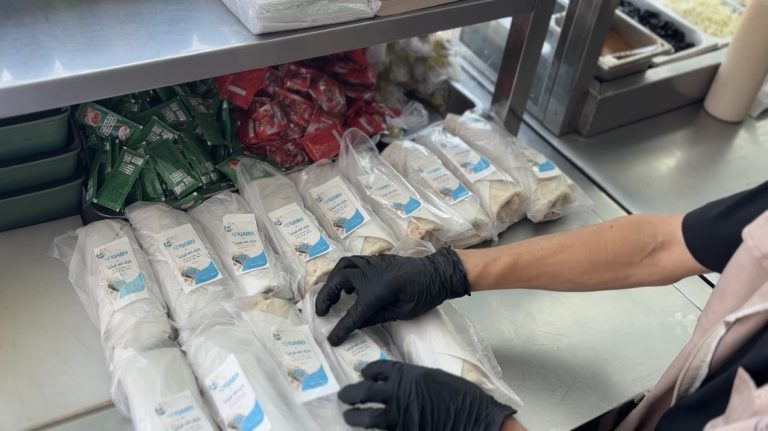
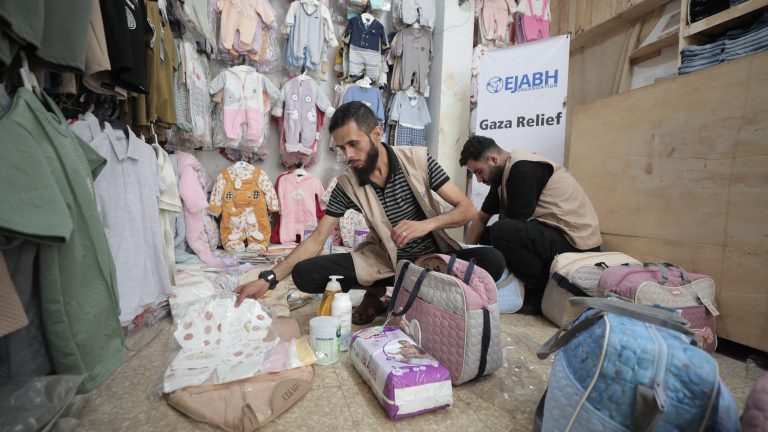
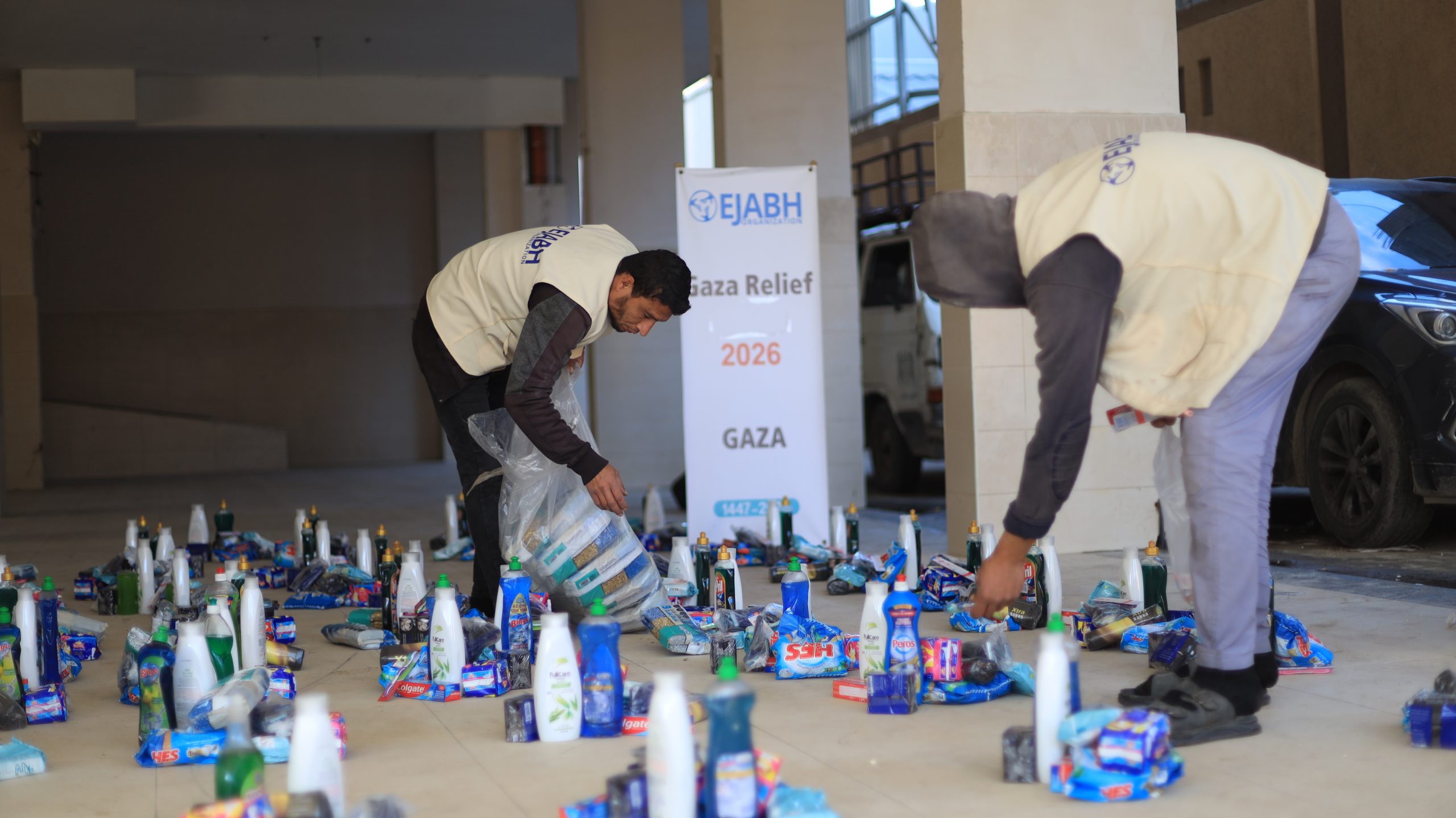
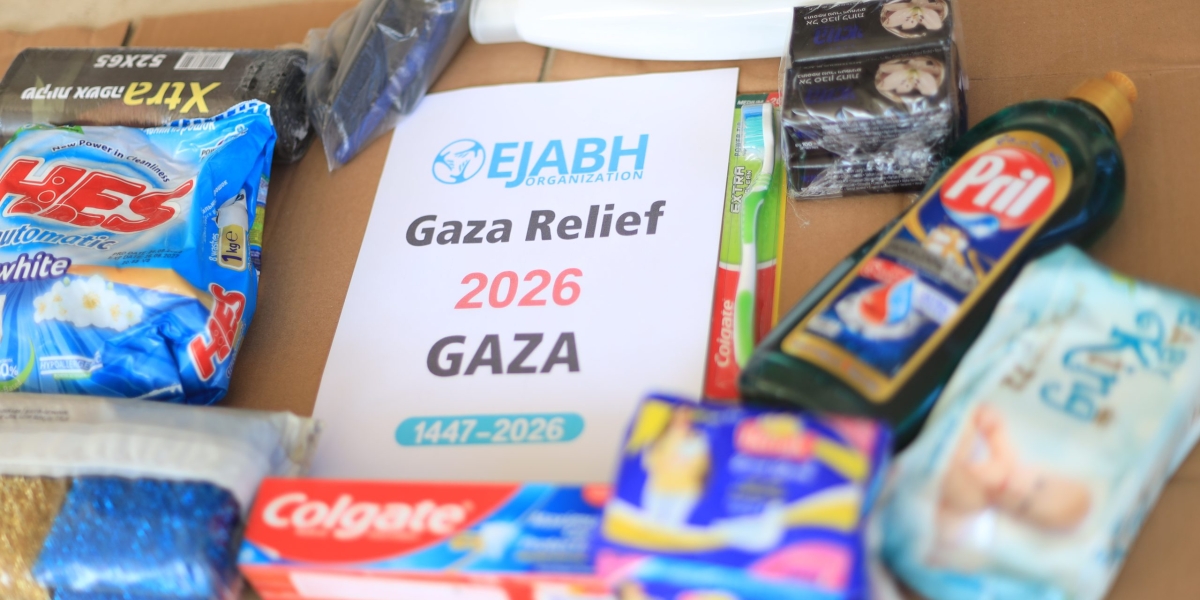
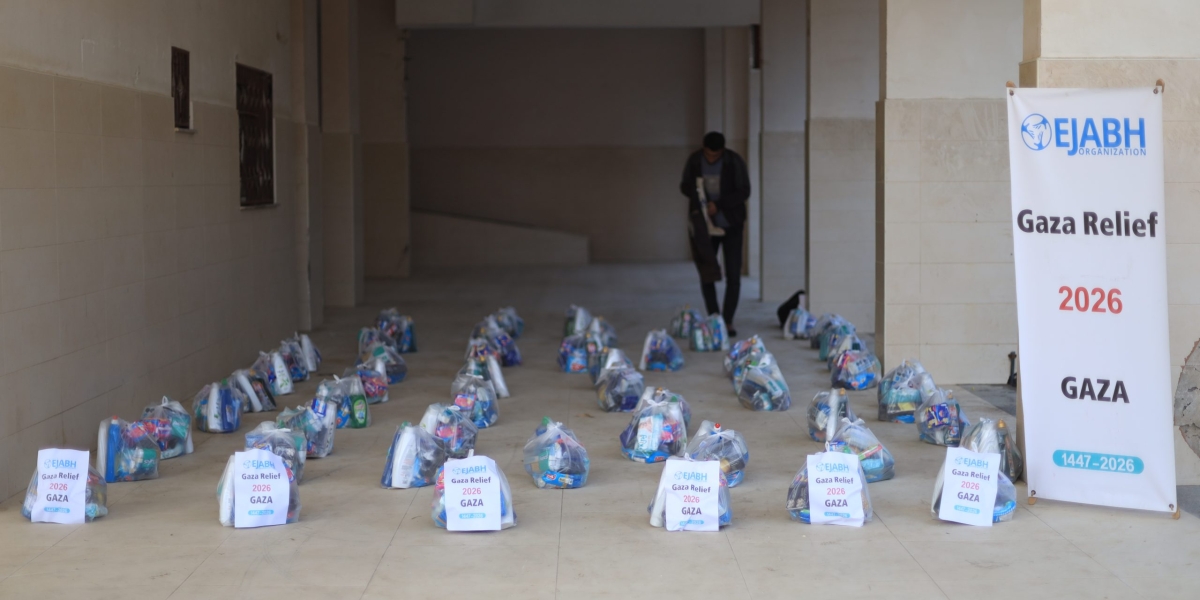
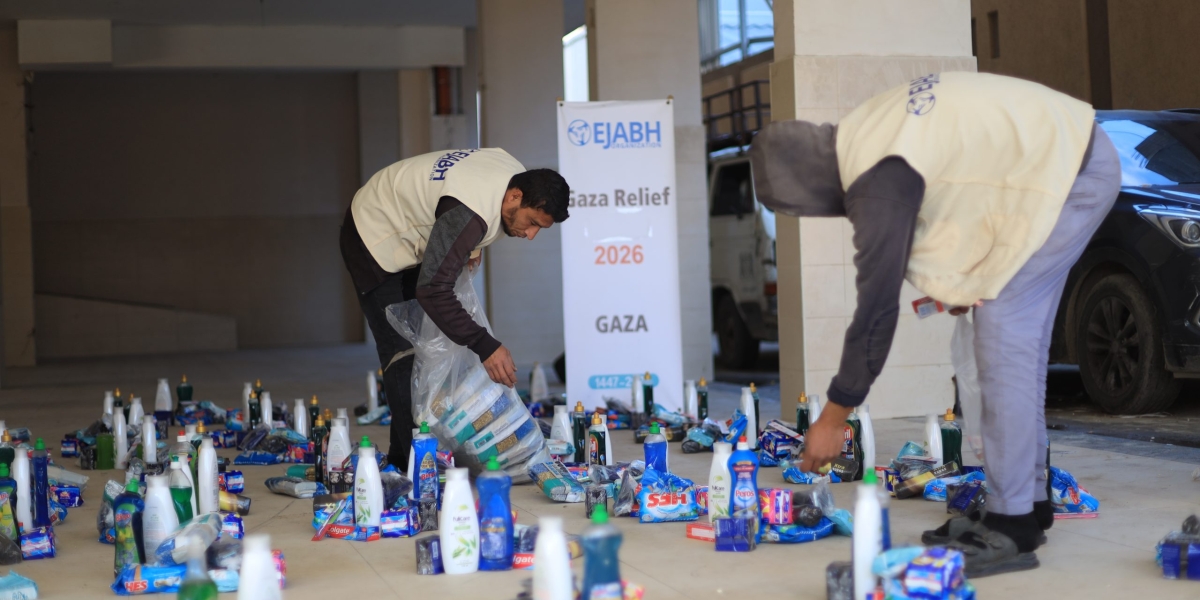
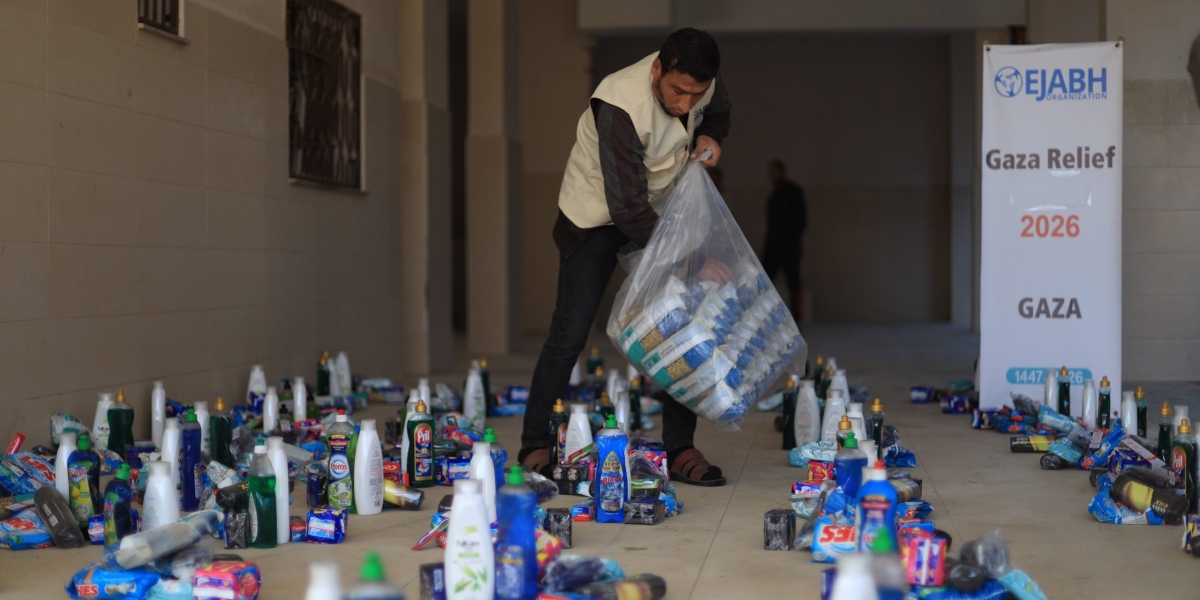
The process of choosing the components of these kits was far from random. It was based on a careful analysis conducted by the organization’s relief and medical committees to determine the baseline daily essentials required to protect an entire family for an extended period. Given the extreme administrative and physical restrictions surrounding the entry of goods through blockaded border crossings, Ejabh navigated complex logistical obstacles to secure high-quality preventative supplies, which included:
-
Antibacterial Agents and Medical Antiseptics: For sanitizing hands and the immediate surfaces children touch inside makeshift tents.
-
Child-Safe Shampoos and Medicated Body Soaps: Formulated gently for skincare to prevent irritation caused by intense heat, dust, and dehydration.
-
Concentrated Laundry Detergents and Washing Powders: To empower mothers to wash clothes and bedding continuously, thereby eradicating the parasites causing recurrent infections.
-
Sensitive Personal Care Items: Including essential feminine hygiene products, nail clippers, toothbrushes, and toothpaste to maintain basic oral health.
3. Field Distribution Strategy: Targeting the Most Vulnerable Hotspots
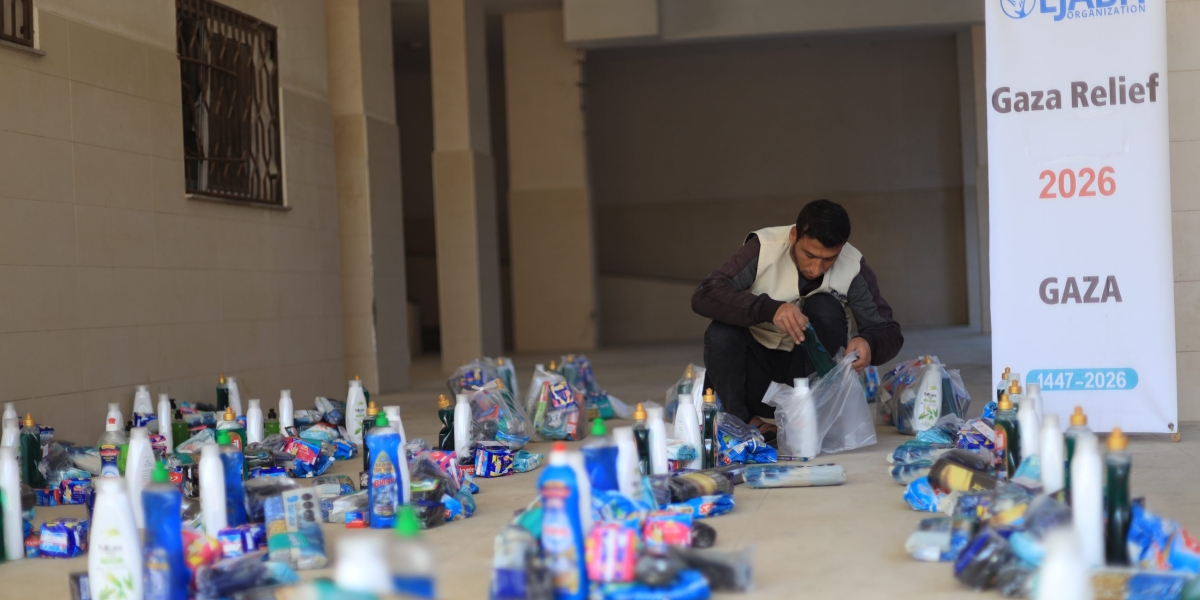
Ejabh’s field teams adopted a data-driven and deliberate distribution map. Rather than waiting for families to seek aid, teams actively deployed to conduct field assessments in informal camp clusters and densely populated shelter centers that suffer from a total absence of water and sanitation infrastructure, classifying them as high-risk epidemic zones.
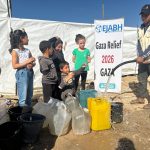
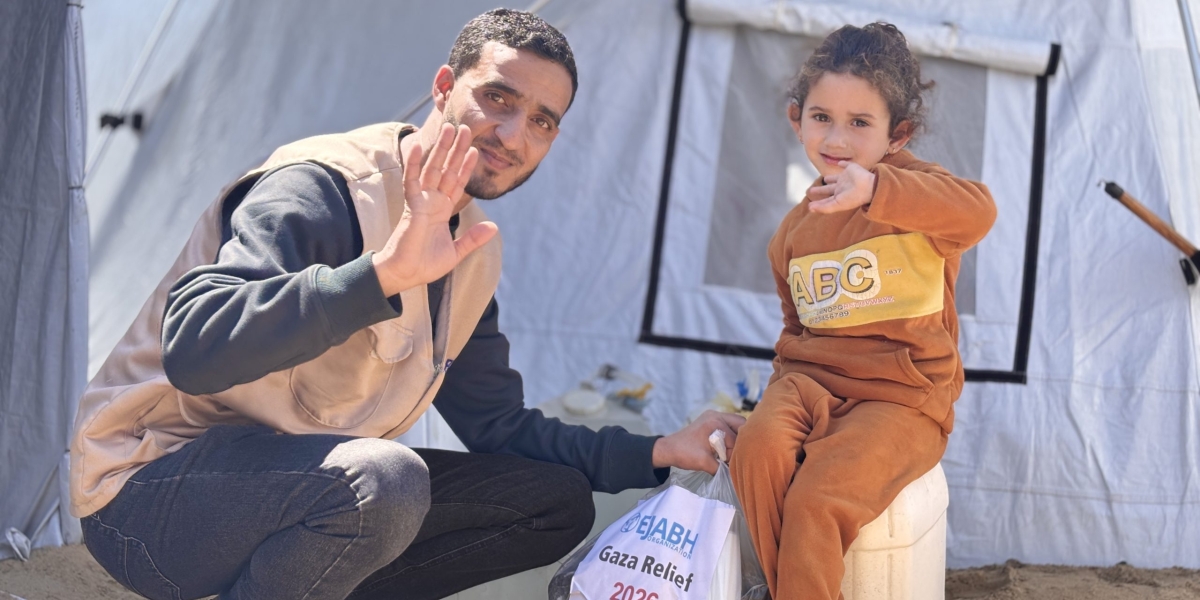
Our distribution convoys delivered these hygiene kits hand-to-hand directly to families and mothers at their living spaces. This method successfully prevented chaotic overcrowding or stampedes that could otherwise facilitate the transmission of skin conditions. Furthermore, the distribution was accompanied by brief, localized awareness sessions conducted by our volunteers, advising mothers on the most efficient ways to ration these scarce cleaning materials with the available water to achieve the highest possible preventative protection for their children.
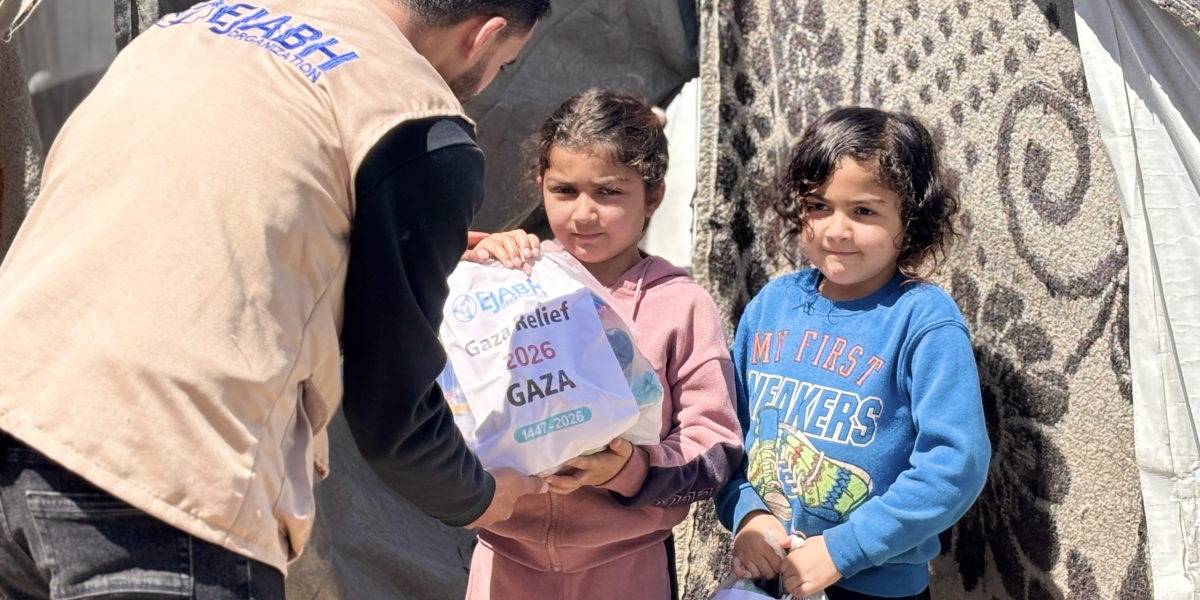
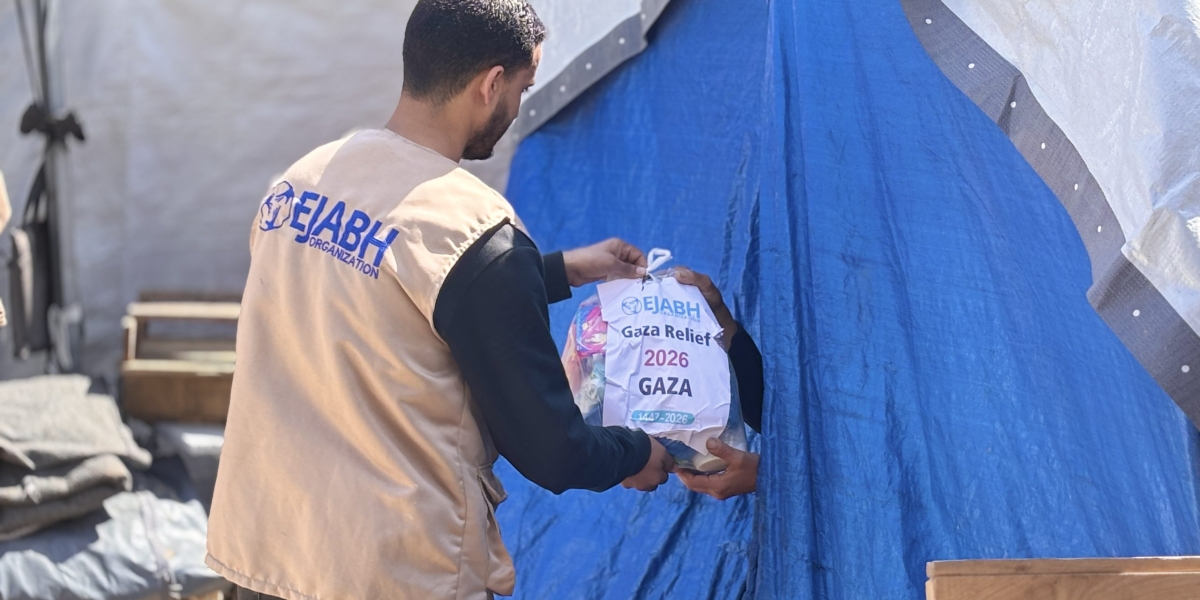
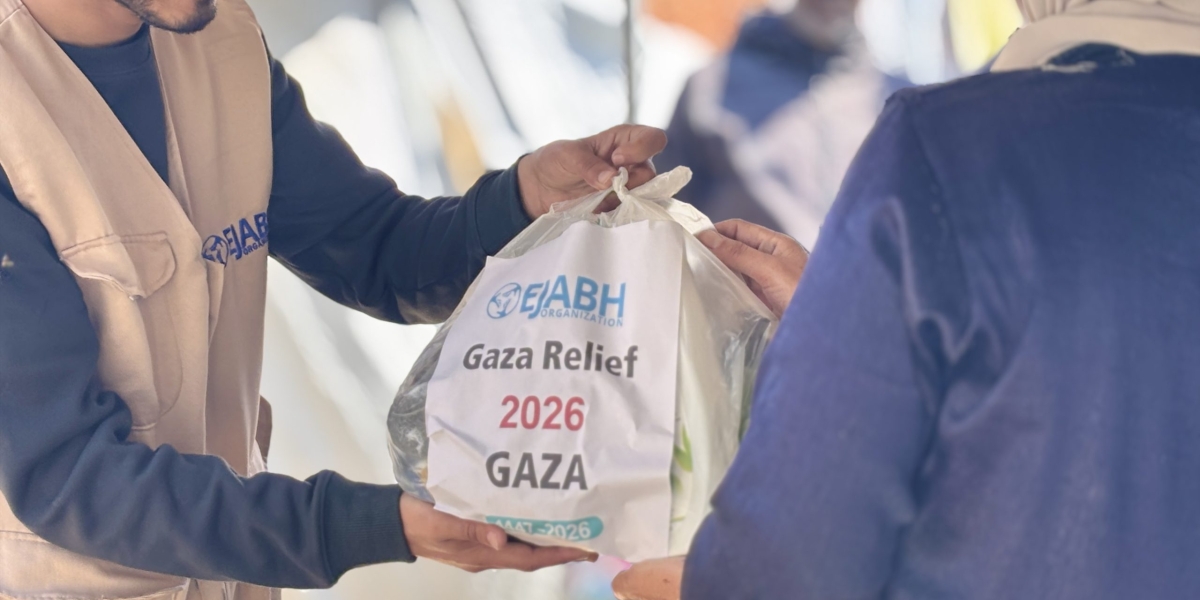
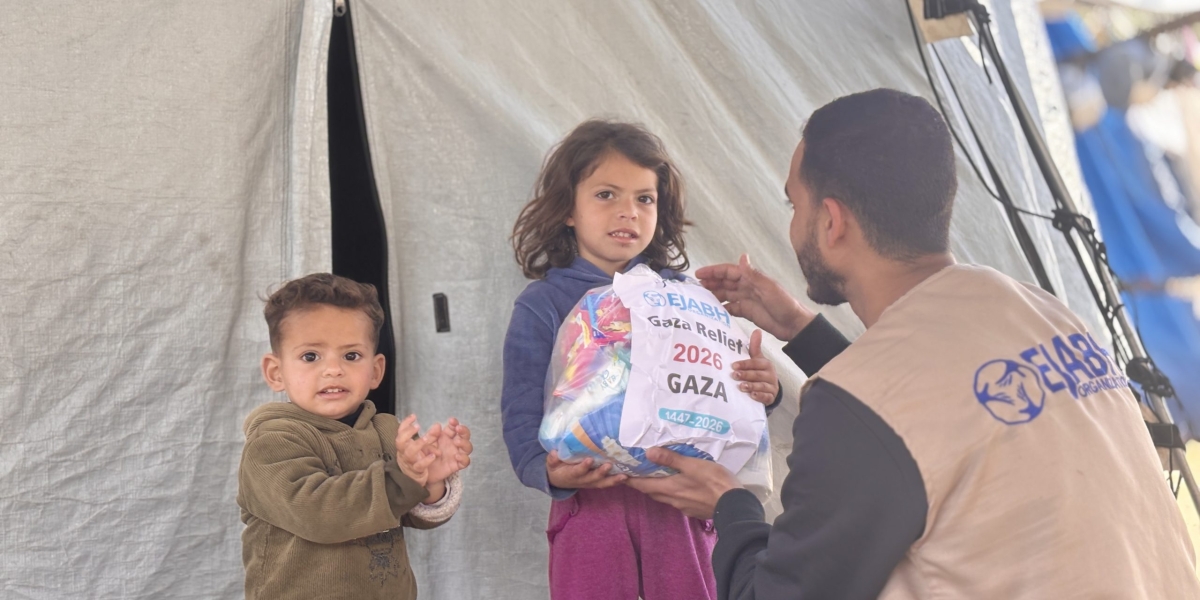
4. Transparency and Field Documentation: Honoring Impact and Human Dignity
At Ejabh, we firmly believe that safeguarding human health and strictly preserving the dignity of those we serve is the very core of authentic humanitarian work. Grounded in this principle, every stage of this project—beginning from financial procurement and logistical contracting, through packaging and storage, up to the final hand-to-hand delivery in the field—is subjected to rigorous financial and administrative auditing systems to ensure donations reach their intended beneficiaries with maximum efficiency.
We remain committed in every single campaign to issuing comprehensive periodic reports (both administrative and visual). These updates place our partners in good and generous donors directly at the heart of the action, allowing them to see how their contributions have built a tangible shield of protection that sanitizes a child’s environment, protects a vulnerable young body from severe inflammation, and restores a mother’s capacity to care for her family safely. Throughout this documentation process, we maintain an unyielding ethical commitment to protecting the privacy, honor, and dignity of every single recipient.
Your continuous generosity directly contributes to improving the health conditions of the displaced. Through your conscious solidarity, we will keep sending public health and hygiene convoys to sustain our people in the Gaza Strip and secure a healthy, dignified life for them. Join us today and become a partner in protecting a family.